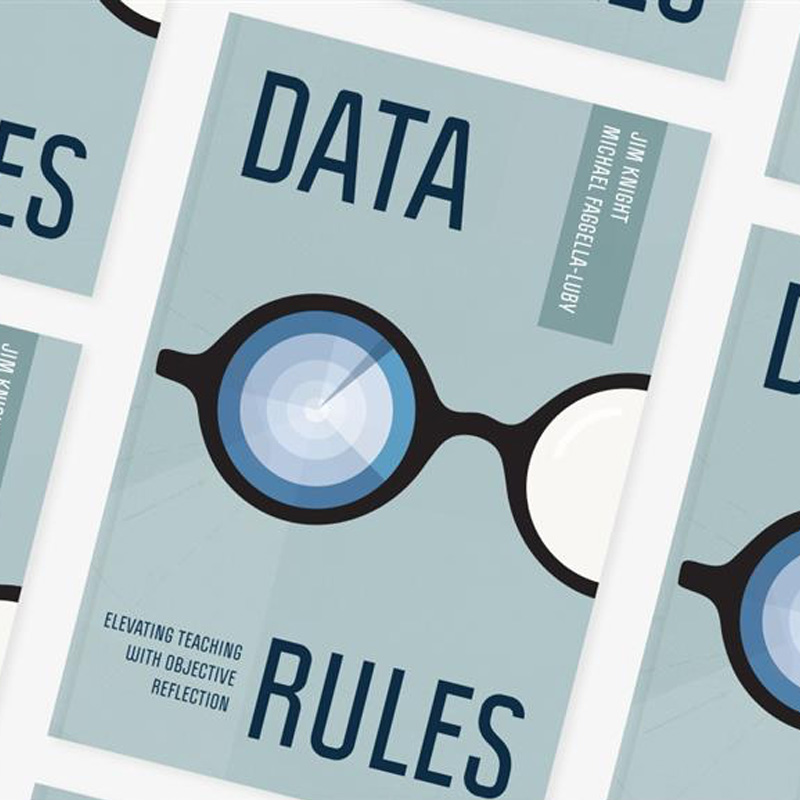
When you watch a recording of yourself teaching for the first time, it’s often surprising—sometimes uncomfortably so. The classroom you thought you were leading doesn’t always match what the video shows. This gap between perception and reality is exactly why data plays such a critical role in improving our practice as educators.
Just as professional athletes rely on statistics, game footage, and performance metrics to refine their skills, educators need data to guide meaningful improvement. Whether you’re coaching yourself, working with a colleague, participating in a professional learning community, or leading a schoolwide initiative, data provides the foundation for effective change.
Seeing Past Our Blind Spots
Here’s an uncomfortable truth: most of us don’t really know what our teaching looks like in action. This isn’t a personal failing—it’s simply how human perception works. Our brains naturally filter and interpret reality in ways that aren’t always accurate.
Common perceptual errors often distort how we see our own practice. We might suffer from confirmation bias, noticing only the evidence that supports what we already believe about our teaching while overlooking contradictory information. The recency effect can lead us to remember only our most recent lessons, giving us a skewed view of our overall effectiveness. We’re also prone to the halo effect, where one positive aspect of our teaching causes us to overestimate our performance in other areas. These mental shortcuts happen automatically, making it difficult to see our classrooms objectively without external data.
Beyond perceptual errors, we also deploy defense mechanisms that protect our self-image but obscure reality. Rationalization allows us to create logical-sounding explanations for teaching practices that might not actually be effective. Projection might cause us to attribute our own teaching challenges to external factors—difficult students, lack of resources, or administrative demands—rather than examining our own practice. Denial can prevent us from acknowledging problems that data clearly reveals, while minimization leads us to downplay the significance of areas where we need to grow.
These psychological patterns aren’t character flaws—they’re universal human tendencies. As research on useful delusions suggests, some misperceptions of reality can actually help us cope with life’s challenges. If we saw every difficulty with brutal clarity all the time, we might become overwhelmed. A bit of optimism and selective perception can help us face the inherent challenges of parenting, illness, or even a global pandemic.
But when our goal is professional growth, we need to cut through these natural distortions and see reality more clearly.
What Data Reveals
Data serves as a mirror that reflects what’s actually happening in our classrooms, not what we hope or assume is happening. When we measure concrete elements—student engagement levels, the percentage of class time spent on active learning, how often we provide positive feedback, or patterns in student responses—we gain an objective picture of our practice.
This clarity often becomes a powerful catalyst for change. When a teacher discovers through data that only 40% of students are actively engaged during direct instruction, or that they’re providing corrective feedback five times more often than positive reinforcement, they naturally feel motivated to adjust. The data doesn’t just point out problems; it reveals opportunities to create the classroom environment they truly want.
Focusing Effort Where It Counts
Perhaps most importantly, data helps us avoid wasting energy on changes that won’t significantly impact student learning. Without data, we might invest tremendous effort into strategies that address surface-level issues while missing the fundamental challenges.
Consider a teacher struggling with student engagement who decides to implement a rewards system—stickers, points, or prizes for participation. This might create a temporary bump in enthusiasm, but data could reveal that the real issue isn’t motivation but relevance. Students might be disengaged because they don’t see how the content connects to their lives. Armed with this insight, the teacher can focus instead on designing assignments with real-world applications. This is a change that addresses the root cause rather than treating symptoms.
Measuring What Matters
Data also provides something essential for any improvement process: a clear finish line. When embarking on a change initiative, one of the most powerful questions we can ask is: “If I achieve this goal, what will be different or better for my students?”
This question forces us to define success in concrete, measurable terms. Instead of vague aspirations like “improve student engagement,” we can set specific targets: “increase the percentage of students actively participating in discussions from 40% to 75%,” or “reduce off-task behavior during independent work from 30% of class time to 10%.”
These specific goals give us both direction and a way to measure progress. Even within continuous improvement cycles focused on incremental growth, having clear metrics helps us know whether we’re moving in the right direction.
The Path Forward
Using data effectively isn’t about reducing teaching to numbers or losing sight of the human elements that make education meaningful. It’s about seeing our practice clearly enough to make informed decisions about how to improve. It’s about moving past the natural blind spots and protective mechanisms that all humans possess, so we can become the educators our students deserve.
The question isn’t whether to use data. It’s already all around us. The question is whether we’ll use it intentionally to guide our growth, or whether we’ll continue teaching based on incomplete perceptions of what’s happening in our classrooms.
When we embrace data as a tool for clarity and improvement, we give ourselves the best chance to make changes that truly matter for the students we serve.